Search the Community
Showing results for tags 'nyc'.
Found 15 results
-
 Hello fellow DPs and camera conisseurs! We are a newly opened boutique rental house in the heart of NYC. We'd love to be helpful! www.camerarentalsnyc.com (you can order directly through the site) 1460 Broadway, New York, NY, United States, New York (310) 350-5384 rentals@camerarentalsnyc.com We love supporting creative vision with high-quality gear and personalized assistance, and a seamless rental experience from start to finish. We provide convenient equipment rental pickup in the heart of Manhattan, right next to Times Square / the 42nd St Subway Station for the N, Q, R, W, 7, B, D, F, and M lines. The rentals are truly “by filmmakers, for filmmakers”: all our gear and kits are battle tested / optimized through our own projects. We rent out equipment in the camera department that we feel is forward-thinking, useful and fills gaps. If you’re looking for innovative and budget-conscious tech to tackle your productions, you’re in the right place. We do full camera department rentals – from the seminal Alexa 35 to the all-time favorite ARRI Alexa Mini to RED Komodo, Atlas Orion Anamorphic lenses to Sigma Cine Zooms, BMPCC 4K and BMPCC 6K camera bodies to wireless video & follow focus, Director’s Monitor, camera rigs, MoVI Pro Gimbal, Video Village, tripods, lighting for high-end documentaries, corporate interviews and a lot more. Cheers, and please feel free to reach out! Toby
 -
A while back there was a member on the forum in NYC that complained their movie career was not evolving as fast as they had hoped. I can't remember all the details, but my feelings on that would be...if you can afford to live in NYC, even just, you are a success! Recently photographer Elliott Erwitt's NYC Central Park's residence came up for sale after he passed away. I seldom study NYC real estate prices. I could never even afford the co-op's maintenance fees, let alone the sales price. So, I was kinda shocked it was so high and it sold so fast. It is a whole different world in NYC. Erwitt had a little studio downstairs as well. Between the 2 co-ops, the monthly maintenance fee was just under $20,000 a month. Here are some of Erwitt's photos... <><><><> Daniel D. Teoli Jr. Archival Collection Daniel D. Teoli Jr. Small Gauge Film Archive Daniel D. Teoli Jr. Advertising Archive Daniel D. Teoli Jr. VHS Video Archive Daniel D. Teoli Jr. Popular Culture Archive Daniel D. Teoli Jr. Audio Archive Daniel D. Teoli Jr. Social Documentary Photography
-
At The Foot Of The Flatiron 1903 LOC D. D. Teoli Jr. A. C. : D. D. Teoli Jr. A. C. : Free Download, Borrow, and Streaming : Internet Archive An interesting tidbit of history from 120 years ago in 1903. On a windy day, at the foot of the Flatiron building in NYC. The Flatiron Building was built 1-year earlier in 1902. Film via LOC with added music. <><><><> Daniel D. Teoli Jr. Archival Collection Daniel D. Teoli Jr. Small Gauge Film Archive Daniel D. Teoli Jr. Advertising Archive Daniel D. Teoli Jr. VHS Video Archive Daniel D. Teoli Jr. Popular Culture Archive Daniel D. Teoli Jr. Audio Archive Daniel D. Teoli Jr. Social Documentary Photography
-
Been downsizing and cleaning up things. I finally found the lost SD card from a 2018 IR flash shoot at B&H in NYC. It got lost a short time after I shot it. As in...lost so fast I didn't have time to put it on the computer. It was Christmas time and I was out doing some street photography on a Sunday afternoon in Manhattan. It started to rain. I was in the area, so I thought I'd step into B&H to give them some infrared radiation. I spent about 20 minutes looking around. Took 109 IR flash photos then left. All candid stuff. I was in a rush to get back to Jersey City as I was leaving that night for Ohio. Being is a rush, the card got misplaced when I packed up. Glad I finally found it. My worst nightmare was finding the card after the data had degraded. You can't keep SD card data forever and not plug it is every few years to keep the data fresh. I was told they hold data for 10 years without a plug in. The longest I've gone is 5 -6 years without a plug in and data was still good on the SD card. Nothing spectacular from the shoot. But it was interesting to do and sure beats standing in the rain! Zir can also go in 'Burkas & Hijabs of New York' project. I like it when I get photos that are useful in other projects. More bang for the buck so to speak. IR flash does not go too far. It is not the best thing for long distance shots. You benefit very little from available light unless you are getting tons of it. But if you were doing staged work you could set up a bunch of IR flashes for distance. They got a room when leaving B&H for people to unbox and fondle their new gear. If it was a gun store people would want to unbox and start loading up! Still doing post work going through the photos. Lots of post work. These are all shot from the hip with zone focus and zone exposure. Consequently...lots and lots of PP! <><><><> Daniel D. Teoli Jr. Archival Collection Daniel D. Teoli Jr. Small Gauge Film Archive Daniel D. Teoli Jr. Advertising Archive Daniel D. Teoli Jr. VHS Video Archive Daniel D. Teoli Jr. Popular Culture Archive Daniel D. Teoli Jr. Audio Archive Daniel D. Teoli Jr. Social Documentary Photography
-
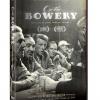 Click to view larger size This was a 1991 public service announcement in P.O.N.Y X-Press magazine. A publication put out by Prostitutes of New York. (An informal guild of sex workers.) I was scanning the mag for my Curator-at-Large in England. He supplies me with material he finds in the USA he wants scanned and I scan for him. And it is also shared with my Archive, so, we both benefit. Normally I don't read much of the text I'm scanning; I just look at some of the photos. And even then, not much time for the photos. I scan many tens of thousands of pages a year, so can't look at everything. And I'm not much of a reader anyway, I like photos. Point of all this is...I'm lucky I found this interesting tidbit because I usually don't read the mags.
 -
I got this email from Leslie-Lohman Museum. (NY museum that specializes in homosexual material.) I had emailed earlier offering a donation a number of rare DVD's that are up their alley, but I never got a reply. Well, at least they are trying. But first step is to answer your email. -------------------------------------------------------- Calling all queer collectors, media makers, artists, and hoarders! It’s time to get your old tapes out of the closet...and over to the Leslie-Lohman Museum so you can get those tapes digitized! CALL FOR PARTICIPANTS Community Digitization at the Leslie-Lohman Museum August 21 - August 25 SIGN UP HERE Do you have home movies or art projects trapped on audio or video tapes? Maybe you wish you could watch that video you made of that performance your best friend organized in 2000? Or the one you shot at a protest you attended in 1995? Or that experimental video art project you edited in 1987? SIGN UP SIGN UP to participate in XFR Collective’s week at the Leslie-Lohman Museum as part of the exhibition Arch during the month of August. Or just stop by our exhibit! See us at work, watch selections from our collection of digitized community videos, poke at old media hardware, or hang out and chat with us about media archiving. Too often, works created by and offering documentation of queer communities get trapped on hard-to-play, degrading, magnetic media in basements, under beds, and (yes) inside closets because the cost to store, preserve, and transfer media is too high. It is vital that independent, queer, low-income, experimental, community based artists and artists groups have the tools and knowledge to preserve their own work. If we don’t lead to take care of our own work, it’s likely that no one else will. XFR Collective, an all-volunteer archiving and education group, is hosting a video and audio transfer station in the Fritz Lohman Gallery at the Leslie-Lohman Museum. In addition to offering free digitization services by appointment, the station will also offer a space to discuss strategies for preserving personal and community media. Visitors will be invited to watch tapes as we transfer them, and to seek advice from XFR Collective members about preserving AV materials. We believe that it is important to include “preservation” as part of the conversation around queer visual history - we believe that archiving, preserving, and making accessible community media that lies outside of the mainstream is essential for the creation of a more inclusive understanding of our past and present. Appointments. All appointments are facilitated by XFR members and volunteers trained in digitization and preservation. Transfer appointments are intended for both the process of digital transfer, and also as an opportunity to engage in a dialogue about the content of each tape and the question of how to care for digital files. Participants should be aware that the works they bring for transfer will be publicly viewable during the transfer, and they are expected to remain present for the duration of the appointment (approximately two hours). Visitors to the exhibition are also welcome to watch and ask questions while we work. If you are unavailable or unwilling to make a public appointment, XFR collective offers small scale digitization services. Learn more on our How We Work webpage. To apply for an appointment please complete the following form: https://forms.gle/NSErN5bcvuxhX2Pe7. Completing this form does not guarantee an appointment. An XFR member will follow up with a confirmation email. Formats. All media submitted must be original material that was created by the participant, or original material that the creator agreed to allow the participant to have digitized. All rights and permissions to material must be attended to by the participant. The following media formats can be accommodated: Video (NTSC only): VHS, Hi8, and MiniDV Audio: Compact audio cassette Process. For each appointment, XFR members will advise participants on best practices for preservation and transfer. Appointment times include both inspecting the tape, gathering necessary information, and digitizing the tape. To determine what work to select for digitization, participants are asked to consider a 2:1 ratio of digitization to assessment time. For example, two hours of tape transfer necessitates one hour of preparatory or troubleshooting time. Since old tapes can be susceptible to deterioration or mold, participants are advised to select the media you would most like preserved, but also to bring back up material in case your first choice of tape requires more in-depth conservation work than we will be equipped to perform at your appointment. Storage and distribution. All materials that are digitized by XFR Collective will be made publicly available on the Internet Archive, a nonprofit institution whose mission includes offering “free and open access to all the world's knowledge” and providing permanent access for researchers, historians, scholars, and the general public to cultural heritage collections. All participants will be able to download preservation-grade digital versions of their materials from the Internet Archive. Selections from the digitized content posted on the Internet Archive may be informally screened at future XFR Collective events. Since access is an important part of XFR Collective’s mission, appointments will be prioritized for those that agree to online access. However, if you have concerns regarding access to your content on the Internet Archive, we are happy to discuss this in advance of your appointment. More information regarding XFR Collective’s use of the Internet Archive is available upon request. What is XFR Collective? XFR Collective is a non-profit organization that partners with artists, activists, individuals, and groups to lower the barriers to preserving at-risk audiovisual media – especially unseen, unheard, or marginalized works – by providing low-cost digitization services and fostering a community of support for archiving and access through education, research, and cultural engagement. At its core, our collective aims to support the inclusion of all peoples in the preservation, and circulation of media created by artists, individuals, and organizations. For more information about XFR Collective visit our website. The exhibition. Arch is an exhibition that presents new opportunities for liveness, audience engagement, collectivity, worldmaking, and preservation. During the exhibition’s four weeks, visitors will have the chance to interact with the work of four different collectives/artists — Savannah Knoop, micha cárdenas, XFR Collective, and Memory Foam — each of whom will occupy the Fritz Lohman Gallery for one week. From digitizing analog archives to excavating institutional histories to storytelling and time traveling, the exhibition focuses on practices that dually emphasize collaboration and temporality. Images: (c) XFR Collective, 2019. Wednesday - Sunday: 12-6 PM Thursday: 12-8 PM LeslieLohman.org
-
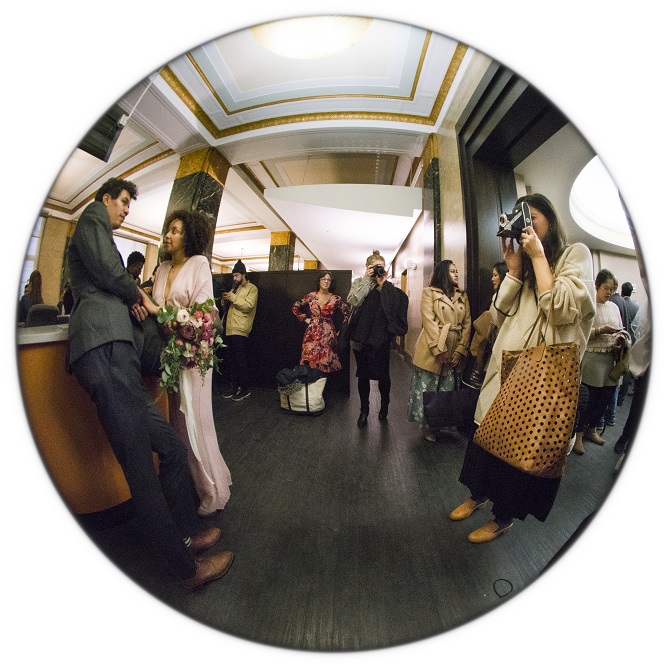
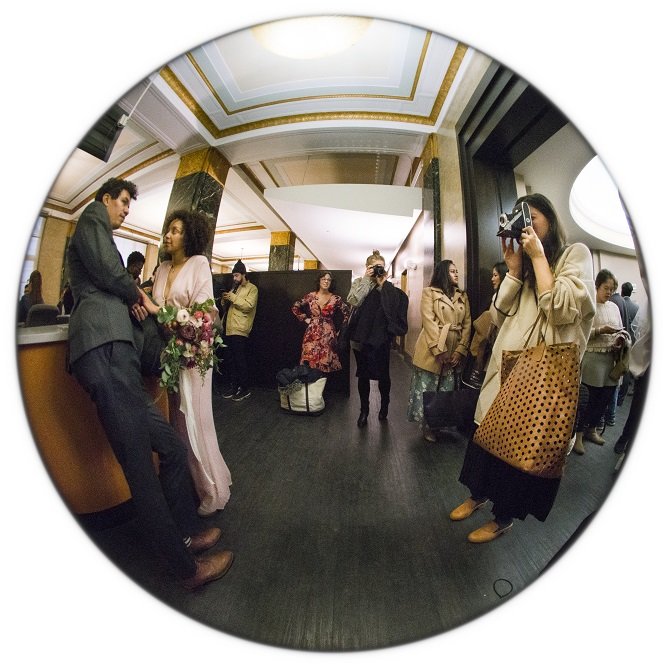
You don't see many people using this cam nowadays Manhattan Marriage Bureau - December 2018 (Candid)
-
If you have never been to Strand, give it a visit. Outstanding art and photo, cinema book sections as well as almost anything else you could want for books. The son of the founder just died and his daughter is running it now. You never know how long these family affairs keep going. Her kids may not want to take it over, so I figured I better archive the Strand a little. I visited the store before Xmas in Dec 2018. Spent about 1-1-/2 hours walking around. Shot 274 photos and just finished the first set. Still have lots more photos to look through. https://180thecircularfisheyeatlarge.home.blog/2019/02/12/strand-bookstore-nyc-set-1-of-3/ 4 floors of books and they claim 18 miles of books including their warehouse. 4th floor has some great lectures and presentation as well. It is a fixture of NYC. Here is photo of photographer Eggleston along with Steidl at the Strand. Internet Photo - Fair Use (forum blocked photo use)
-
When it opened in January 1970, Westbeth became the first and largest federally subsidized artists’ colony in the country. https://www.artsy.net/article/artsy-editorial-inside-new-yorks-remaining-artists-housing
-
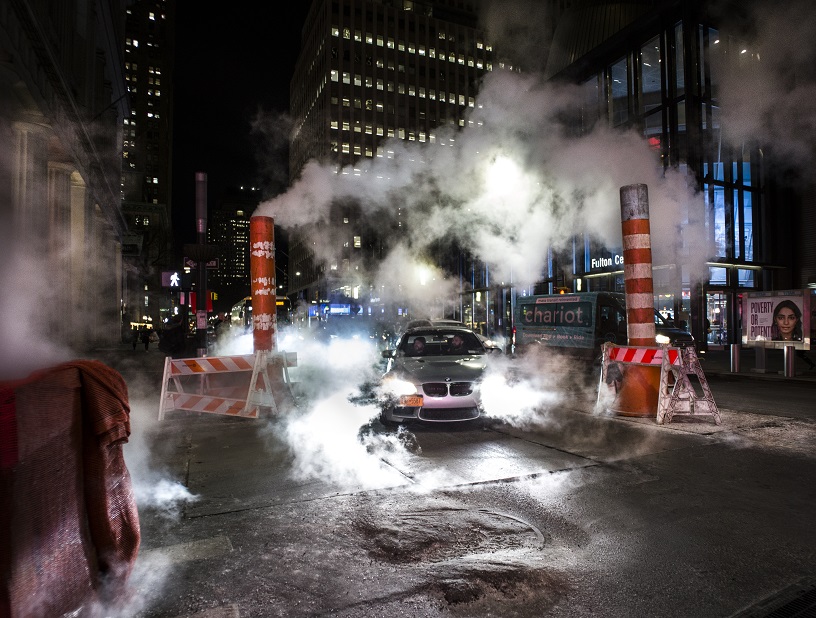
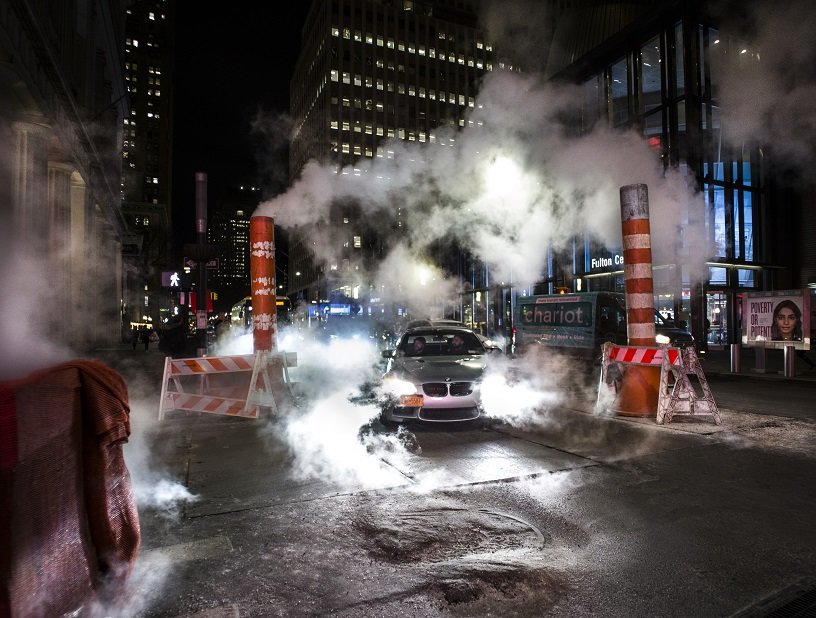
If you're shooting in the winter in NYC, work some steam into it. Even in the daytime, good steam possibilities. (If you do use steam, don't forget to give me some credit for creatives.)
-
 Hi everybody. I was wondering if anybody could give some advise on where I'd be good to apply for internships/entry level prep technician in NYC. I know Abel, Arri CSC, Adorama but I wanted to know if you know any other smaller/worth applying ones. Google is not being super helpful! Thanks so much, Davide
 -
 Howdy, y'all- I'm a 27 year-old DP in the New York/New Jersey area and as I've been looking for more and more work over the years I feel that I have been hitting a wall. I come from a G&E background so I've been more used to forming relationships with DPs, owner/ops, and production companies, but I find getting work as a DP to be a different ballgame, so I wanted to know what the pros and cons of hiring an agent are- do they actually find you work, is the cost of hiring someone offset by the increase in gigs, is it better to wait until you join local 600 to hire an agent versus having one in the non-union world, what are some better agencies for less known DPs, is it better to hire someone local or can they be on the other side of the country, etc. etc. Any advice would be appreciated because anything's gotta be better than blindly giving resumes to people who don't know you or scouring Mandy.com. Thanks in advance!
 -
Hi, I'm currently a junior studying at NYU. I will be graduating around January 2015 and I am trying to plan for my future afterward. Long term, I'd like to become a cinematographer but I'd like to get there through gaffing because I genuinely enjoy working with lighting. I figure I gotta start getting grip and electric jobs. I am pretty skilled working with most basic to intermediate grip equipment and lights and am able to run power from breaker boxes to distro boxes to lights while adhering to the ring of fire. I'd prefer to join a union as soon as possible in order to get consistent work rather than freelancing too long. I'd love to stay in NYC if possible but it seems pretty difficult to get paying work for legit productions and impossible to get union gripping jobs without being in the union. From what I hear and can tell it is extremely difficult to join Local 52 the NYC gripping union. Alternatively, I could move to LA. Joining Local 728 seems decidedly easier than 52 with lower union dues. Also, from what I hear, it seems much easier to get legitimate production work in LA. Does anyone have advice on how to start gripping in NYC and joining the union? How much easier is it to get work in LA and how difficult is it to join 728? How plausible is it to join 728 soon after film school? Thanks guys.
-
I'm working on 2 docs and would like to find a good colorist to work with. We're primarily shooting on a Sony NEX FS100. Thanks! drapershreeve@yahoo.com
-
I'm working on 2 docs and would like to find a good colorist to work with. We're primarily shooting on a Sony NEX FS100. Thanks! drapershreeve@yahoo.com