Search the Community
Showing results for tags 'asa'.
Found 7 results
-
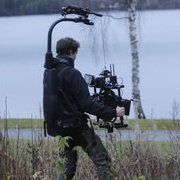 I wrote a little bit about the process of pushing the ARRI Alexa to 2500 ASA for “Made in Oslo” which is competing for the Golden Nymph at the Monte-Carlo Television Festival next month. Thought some might find it interesting. http://johnerling.no/blog/2022/5/6/kg63lcplguxcirlpbxu5se2p0lffdm
 -
Hey, I was reading through Kodak's 'The Essential Reference Guide for Filmmakers' and came across the following: A word about film speeds You probably know that motion picture films use exposure index (EI) to indicate speed. Although similar, EI is not the same as the ASA or ISO speed used for still films. EI denotes a somewhat conservative figure related to the higher quality requirements of motion picture film that must be projected onto a large screen. Typically the EI speed is about one stop lower than ASA or ISO. EI 500 film, therefore, is the equivalent of ASA/ISO 1000. Is anyone able to develop further on this? It is the first time I've come across the concept that EI is not the same as ISO. If I take what is written literally, does this mean that I should be setting my light meter to read at 500 instead of 250 (assuming I am shooting on say 250D stock) to get correct exposure? All the best, Connor
-
Hello I recently picked up a Canon 814 XL and I have many questions about film speed and manual exposure. To start, Most of the time I'm going to be using Kodak film stock. 50D 200T 500T I understand these are ASA speeds correct? I read my cameras manual and i noticed that it does not read any of these film speeds. Artificial - 25 40 64 100 160 250 400 Daylight - 16 25 40 64 100 160 250 My question is, What will my camera read it as then? What does this mean for my auto exposure and manual exposure? I've read some things in these forums about over exposing manually or underexposing, if thats the case, how do i go about doing that? If someone could explain f-stops to me, or refer me to a video or something that would be great! I've seen a few videos on the subject but I'm still a little confused how f-stops and film speed coincide, and how to underexpose and overexpose, things like that. Another question. I've read about a notch hack that you can do to the Tungsten stocks to disable the filter. My question is, Why would you want to do a notch hack on a Tungsten stock when the internal filter corrects it for you?
-
Could someone walk me through the process of rating the Asa of a digital camera?
-
I've been researching the native ISO of RED cameras (primarily the Dragon and MX). What's been confusing isn't the notion of a native ISO, but rather that in the debate between 320 and 800, people are referring to shooting at ISO 800 as underexposing when compared to ISO 320. From one such individual: "At 320 (which may be closer to the sensors "native" sensitivity- or the point where the raw matches the redcolor as far as middle grey) you have much less range in the highlights. By rating 800, you are underexposing the sensor a bit and protecting the highlights." Bear with me as I'm more of a lighting guy, but my question is: how is it that by increasing ISO by 1⅓ stops are you underexposing the sensor? What am I missing? Thanks so much for your help!
-
I just watched this video and tought about the story on Kubrick and the candlelit scenes on "Barry Lyndon". What would he be doing with today's cameras and lenses? Of course cinematographers aren't using f0.7 lenses on day to day basis but, for example, Master Primes and Cooke 5 are pretty bright and camera ISO technology are advancing everyday. With a camera capable of a base ISO 5000 and a Master Prime on T1.3 candlelit scenes would be just the start on the cinematography crative process. What do you think?
-
 I recently purchased a reloadable super-8 cartridge from Wittner and I'm extremely confused about where to cut the ASA notch. I bought the CHROME 200D film which is Daylight: 200 and Tungsten: 50. Please could someone tell me where to cut the notches for this stock? Or somewhere said something about not needing notches for daylight film? Im very confused. I have been trying to use this guide: http://peaceman.de.www127.your-server.de/schmalfilm/super8/S8_Notch_Tools_v1.0.pdf But I'm struggling. Please could someone tell which notch to cut to on this guide? Thank you! -Harry