Search the Community
Showing results for tags 'photography'.
-
 People don't think much of cleaning the photographs before they scan. But RC paper especially attracts a lot of dust. Here is a before and after scan of a RC photo showing how cleaning it affects the scan. Dirty photo Cleaned photo Beside cleaning the originals, the scanner glass has to be clean. But just cleaning it half-ass is not the answer. You have to scan the scanner glass to see how clean it is. Here are 2 scans of the scanner glass. You do it by scanning the open scanner in a pitch-black darkened room. The first scan shows a half-ass clean job, done by say your average jabroni. The second scan show a more thoughtful clean job...after the scanner glass was removed and cleaned. Don't get too anal with the cleaning, sure do a good job. But even if you got an ISO grade clean room...dust and dirt get into the scanner from the originals when you are dealing with archival material. And the scanner itself can make its own dirt from within as it operates. Point is...dirt will find your scanner...just clean the scanner every so often. And you find this out by scanning the scanner itself. Scanner glass after half-ass clean job. Scanner glass after removing the glass and a proper clean job. If you have an assistant, have them blow the glass off with compressed air before you reinstall it. I don't, so I make do with what I got. If you scan 3D materials with your scanner it is better to have a dedicated 3D scanner as well as a photo scanner. Sometimes the scanner glass can get scratched from scanning 3D materials. <>><><> Daniel D. Teoli Jr. Archival Collection Daniel D. Teoli Jr. Small Gauge Film Archive Daniel D. Teoli Jr. Advertising Archive Daniel D. Teoli Jr. VHS Video Archive Daniel D. Teoli Jr. Popular Culture Archive Daniel D. Teoli Jr. Audio Archive Daniel D. Teoli Jr. Social Documentary Photography
 -
Greta Garbo I don't have firsthand knowledge about this photo, but I'm guessing it was a carbro print. Carbro prints were used before they came up with the dye transfer process. Carbro prints were similar to dye transfer prints in the fact that they both used color separation transfers in registration to form the final full color image. Source: Internet / Fair Use <><><><> Daniel D. Teoli Jr. Archival Collection Daniel D. Teoli Jr. Small Gauge Film Archive Daniel D. Teoli Jr. Advertising Archive Daniel D. Teoli Jr. VHS Video Archive Daniel D. Teoli Jr. Popular Culture Archive Daniel D. Teoli Jr. Audio Archive Daniel D. Teoli Jr. Social Documentary Photography
-
I've got a few photography related 16mm films in the Archive. One is a fantastic 16mm salesman's reel on flash photography. (non-Kodak.) This one on paper looks interesting. Hopefully it has some of the paper coating production. It will be a long time before it ever gets scanned. You know the story with trying to get a scanner. Some samples from the Kodak paper film... photos: eBay <><><><> Daniel D. Teoli Jr. Archival Collection Daniel D. Teoli Jr. Small Gauge Film Archive Daniel D. Teoli Jr. Advertising Archive Daniel D. Teoli Jr. VHS Video Archive Daniel D. Teoli Jr. Popular Culture Archive Daniel D. Teoli Jr. Audio Archive Daniel D. Teoli Jr. Social Documentary Photography
-
- 1
-

-
- kodak
- kodak paper
- (and 3 more)
-
Kodak (Mexico?) Inkjet Paper Deterioration See yellowing edge of paper compared to white paper. The entire sheet of Kodak paper has yellow blotchiness. The edge is the easiest way to see the yellowing in a photo. If you have a laptop or unbalanced monitor, you may not be able to see the yellowing. This was Kodak's cheapest paper at the time. From what I recall, the paper was made in Mexico. Paper shown here is 10 years old, stored under normal household conditions. It started to show yellowing about 3 to 4 years ago. All of the rest of this Kodak paper shows the same yellowing. It is hard to get a good photo or scan of the yellowing, but it is easily detected by looking at it under 5,000k lighting. A couple of other major photo paper makers also suffered from yellowing of their cheapest brand of inkjet paper. I didn't record the maker's names. I didn't purchase this paper to print on. I didn't purchase this paper to do archival testing. All these papers were purchased to use as interleaf while printing artist books with an inkjet printer. Unless interleaf was used while printing, the pages would transfer freshly printed ink to the page stacked on it. This was a big problem when using matte black ink, but not a problem with gloss black ink. RC gloss or RC semi-gloss inkjet paper worked best as interleaf as it did not accept any ink transference on the RC coated verso of the paper. <><><><> Daniel D. Teoli Jr. Archival CollectionDaniel D. Teoli Jr. Small Gauge Film ArchiveDaniel D. Teoli Jr. Advertising ArchiveDaniel D. Teoli Jr. VHS Video ArchiveDaniel D. Teoli Jr. Popular Culture ArchiveDaniel D. Teoli Jr. Audio ArchiveDaniel D. Teoli Jr. Social Documentary Photography
-
I slipped and fell into a river today and my Bronica SQ-A was briefly submerged in water, until I managed to drag myself up, anyway. Does anyone have any advice on what I should do to protect the camera from any further damage. And does anyone know if this kind of accident is fatal to SQ-A? More than letting the camera dry out is there anything else I should do? I only recently bought it, so I'd be gutted if that's the case. Any advice would be greatly appreciated thanks.
-
shigeta Remembering photographer Harry K. Shigeta (NSFW)
Daniel D. Teoli Jr. posted a topic in Off Topic
As an all rounder, Harry K. Shigeta was one of my favorite of the old school photogs. He could be depended on for taking a fresh approach to a subject and his work was always top notch technically and outstanding for content and art. Sadly, with the young camera fondlers, Shigeta is all but forgotten nowadays. Here is a piece from the May 1947 issue of Popular Photography showcasing some of Shigeta’s work and technique. <><><><> -
That was a photogs question on a Reddit Photography thread. Here is my take on it... OP...maybe a little. Genius is something you are born with, generally speaking. Although sometimes a thing clicks in the mind and you are ready to go. That is what happened to me after working on infrared flash for 4+ years. Something clicked. But I could have easily given up after 4 years of failure. The genius produces outstanding work with little or no effort, whereas the non-genius may struggle to produce something mediocre. If we could all be geniuses at what we aspire to be going to class or cracking a book open...we would. In the 70's I had a friend that went to Art Center College in L.A. He studied photography. I used to go to class sometimes with him to sit in on classes. I could not afford to go there, so that was as close as I got to Art Center. Anyway, I noticed in the critique sessions for weekly assignments the same students would produce more or less outstanding photos on each assignment. Some would produce OK photos and maybe a great one once in a while and some would produce low end stuff as their general output. Later on with my work as an Art Director I noticed this with artists I would hire or do portfolio reviews on. Some had good technical abilities, but poor creativity. Others had creativity but poor technique. Others had both technique and creativity, but were flakes. Back in the 80's I met a gal in her 40's that retired from business and wanted to be an artist. She was well off selling her business for millions and lived in a mini-mansion in San Marino, CA. She said she had taken some art classes and showed me her portfolio. The draftsmanship was poor and creativity was poor. And her prices to do jobs were very high. Her background as a successful business owner tainted her realistic conception of what is paid for art jobs. Her work smacked of someone with little art talent that struggled to put it down on paper or canvas. It wasn't in her, she had little talent and classes did not do much for her apparently. Now someone with natural talent bangs it out with little or no effort whereas she struggled just to produce sub-par work. In my own case I tried to learn some creativity with book cover design. I produce lots of artist's books. Designing the cover has always been hard for me. I am not a creative person in that area. I bought a number of books on cover design. I studied and studied them over and over again. The best I could do with my creativity for cover design would be to try and copy off of covers I liked in the book. It wasn't in me. When I first started with photography in 1969 / 1970 I wanted to be a fashion / studio photographer. After a few years it sunk in I had no talent for that type of work. Eventually I found what I do have talent in and work in that area. We all have different abilities, so why not make the most of the talents you got? Sure, study all you like but if it is not you, don't waste your life on trying to be something you can't naturally be great at. Do what you are great at. Selection from Weekly World News Front Page Archive Daniel D. Teoli Jr. Archival Collection
-
Hi, everyone! Gonna be shooting a film with a look rooted in Jazz photography from the likes of William Claxton, Dennis Stock and others known for the marvelous images they created around that beautiful genre. Obviously, the film's aesthetic's going to borrow a hell of a lot from these great photographers... However, what I'm most interested in is the B&W film stocks that were around the time in which the most iconic artists were photographed: the 1950s. So, on the one hand, what I'm wondering is if there's anyone in the room with an idea about the the rolls of B&W film available at that time and their characteristics. But on the other hand, I'd like to know if anyone knows where can I find information on the way these photograpers worked, which is to say the lenses and equipment they used, the way they developed their film and created they final shot in the darkroom, etc. Also welcome is information on the film stocks used to shoot movies or documentaries around the 50s. My guess is even at that time Double-X was the real deal, but... You know. A guess is a guess.
-
Article on right of publicity. Lawyer & photographer gives the scoop on candid photography with no model release. https://alj.artrepreneur.com/is-street-photography-legal/ Author says ... "...even if your street photographs are well within the bounds of artistic expression and non-commercial in nature, you never know ... how the law may change over time." I'm thinking that they can't change laws on right of publicity retroactively and suddenly make old photos illegal. But I'm not sure. There is just no telling about anything in 2021. The Chinese have a saying...something can happen in a second that has not happened for a million years. Things have happened in the USA that I never would have thought happen. So I never say never. From the very beginnings of photography people have liked to photograph candid photos of strangers. Daniel D. Teoli Jr. Archival Collection The Wikimedia Commons requires whatever you contribute be released for commercial consumption. Since I get no model releases I don't contribute much there with people in them. And if I do send something in, I block out the faces for the Wiki and specifically say that version is the only one released for commercial use. 35mm film sound tracks Cold water flat - Los Angeles 1970's Living in a cardboard box project - New York The old ICP - New York Maybe someday this will be how it will be for photographers with recognizable people in photos. Our candid photos of people will be like Japanese porn with the privates mosaiced out. <><><><> Linhof Catalog Cover 1963 Daniel D. Teoli Jr. Archival Collection
-
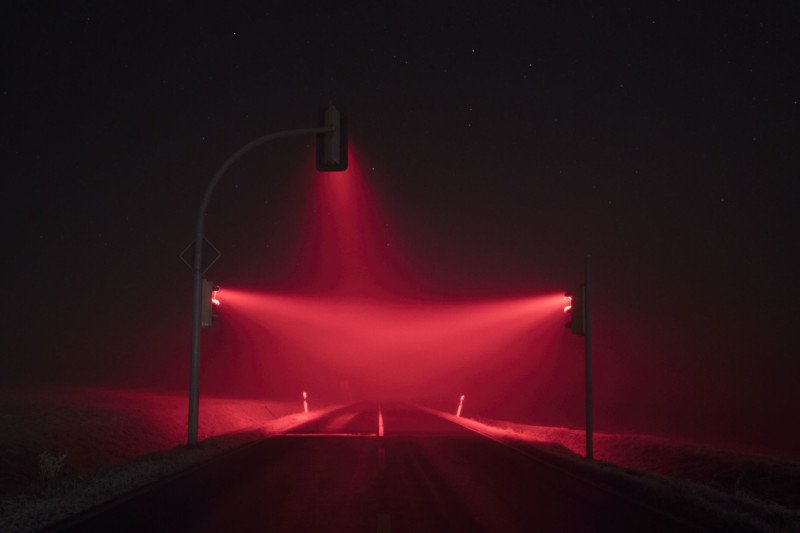
I thought I might reach out to folks a whole lot more knowledgable than myself in regard to a particular lighting challenge I have. And one that isn't strictly to do with film. I am studying for a Masters in Fine Art Photography and am working on a project that looks at the people who believe in the extra-ordinary and have extra-terrestrial stories to tell. People whose beliefs lie at the fringe of society. In the town where I live, there is a curious story of alien abduction (and subsequent quick release) of a pensioner who had gone night fishing and encountered a UFO beside a canal. I would like to recreate elements of the story photographically and to start, I was thinking how I could create a UFO-beam-of-light-type scene of when the man first encountered the UFO. I will be photographing this, not filming it. Where I live means a lot of fog this time of year and I can really use this to my creative advantage. There is a fine art photographer called Lucas Zimmermann's who uses long exposure, fog and traffic lights to create eerie yet mesmerising images (see attached jpgs). Is there portable, battery powered lighting systems that could give the same kind of light as a traffic light? I need to be able to position the lights also. I also attach a photograph of the canal and where the man allegedly saw the UFO. Thought I would reach out to see what idea folk might have. Regards, Matt
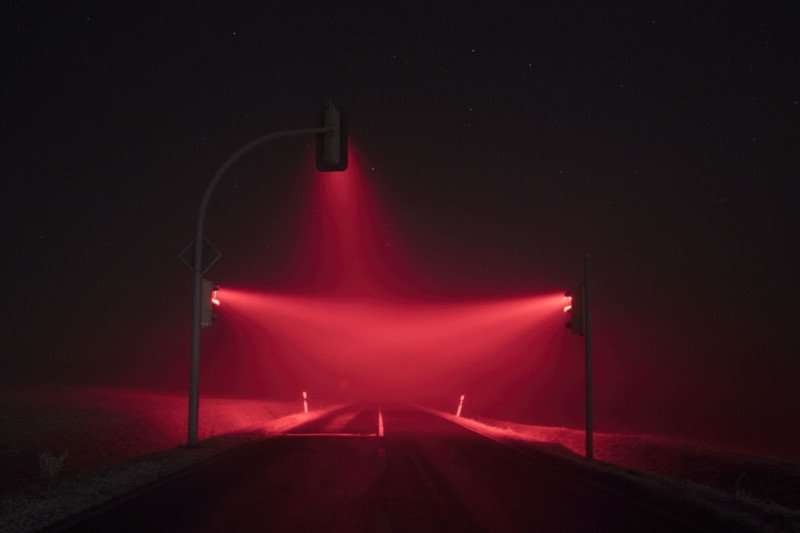
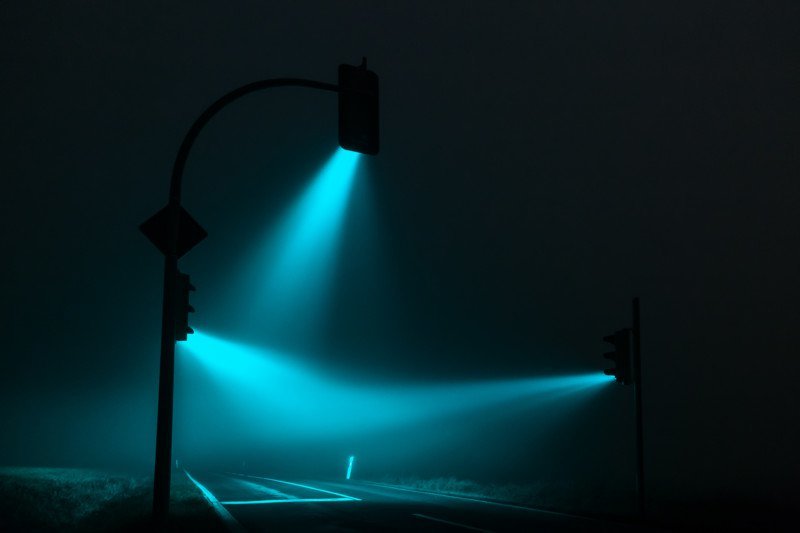

-
Collection of Japanese Collotypes from the Meiji period It is interesting to note that in Japan the job of massage was traditionally given to blind people. See 'Amma' yawning shampoorer https://japancustomscostumes.wordpress.com/2018/11/04/collection-of-japanese-collotypes/
-
This style turns the tintype into a miniature painting. https://vintagephotographyddteolijr.wordpress.com/2018/10/27/collection-of-hand-colored-tintypes/
-
A vintage pinup magazine 'The great cross-country girl hunt' 68 pages. https://photographysgoldenage.wordpress.com/2018/09/27/glamour-photography-magazine-1957/
-
UK's upskirting law can put as photog in jail for 2 years. More and more regulation unfoldingfor street photogs. This time freedom was only saved by 1 vote. No doubt when the one old timer blocking it dies off the millennials will pass it. The United Kingdom recently attempted to make upskirting illegal and punishable by up to two years in prison. But thanks to a single lawmaker, the bill hasnt become law after all. 71-year-old Sir Christopher Chope of Conservative party blocked the bill and he didnt give a reason for it Upskirting, as you probably know, is taking unauthorized photos under a womans skirt. Gina Martin started a campaign against it in the U.K. after she was a victim of upskirting in 2017.She was unable to file a lawsuit because of the gap in the law. Upskirting is not a criminal offense in the U.K., and the police reportedly stated that the photo wasnt obscene enough because she was wearing underwear. The proposed bill would put upskirting in line with other voyeurism offenses, making it punishable by up to two years in jail. As TIME reports, Prime Minister Theresa Mays government gave its backing to the proposed bill on Friday. However, Chopes objection means that the lawwill have to be debated again at a later date. According to the same source, the expected date for a new debate is 6 July 2018. https://www.diyphotography.net/uk-blocks-the-law-that-bans-taking-photos-up-womens-skirts/
-
 Hi Everyone, I love collecting behind the scenes photos where you can see lighting setups from great cinematographers. Does anyone have any they'd like to share? These ASC articles on Se7en and Carol both contain a lot of great bts photos of Darius Khonji's and Ed Lachman's work: https://ascmag.com/articles/flashback-seven-1995 https://theasc.com/ac_magazine/December2015/Carol/page3.html# All the best, Alex
 -
Certain movies can be dissected into still photos and the photos are great shots on their own. Here is one project I did on Godzilla to honor the recent death of actor Haruo Nakajima, who portrayed Godzilla. https://danieldteolijrarchivalcollection.wordpress.com/2017/08/13/the-godzilla/ Until I started to break Godzilla down I never realized how many great stills are in it. Paris, Texas is film has some beautiful scenic shots by Wenders, especially at blue hour. Fellini's La Strada has some strong single frame images. What films stand out in your mind for their great 'single image' photography?
-
Hi everyone I used the Sony A7r mark ii for a time-lapse job and it gave me great results, now i have another time-lapse job, should i try sony a7r mark iii or should i stick to sony a7s mark ii ? Thank you Best regards
-
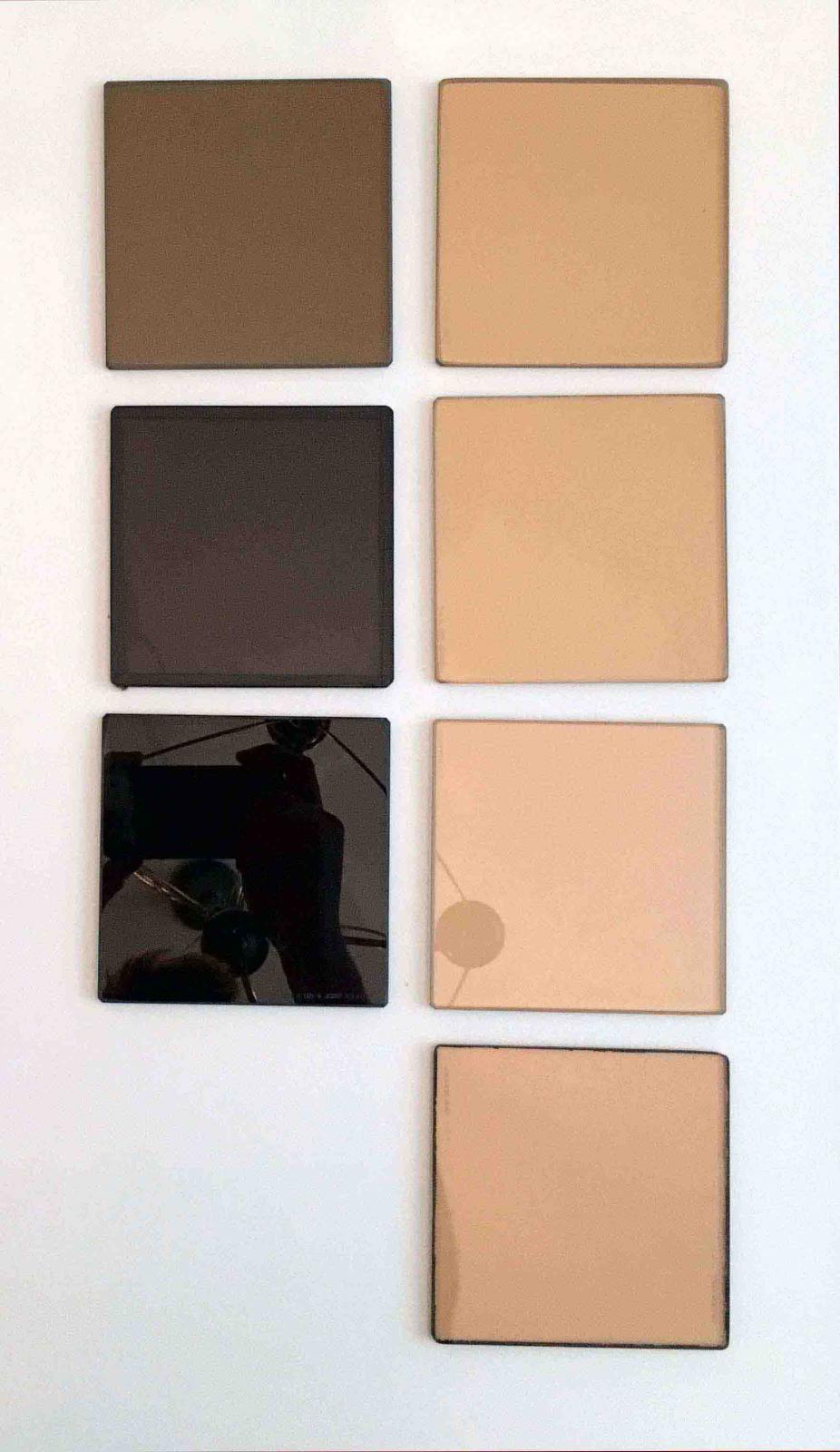
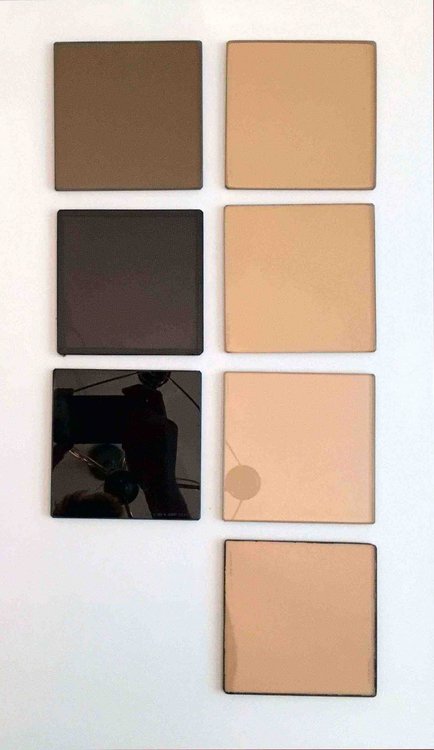
 Hi, I'm selling my filters; 28x Tiffen 4x4 filter. Also selling the metal flight case and a filter pouch for 6 filters. List of filters, 4x 85 4x 85 N3 4x 85 N6 4x 85 N9 2x 85B 1x 85B N3 1x 85B N6 1x 85B N9 1x 85POL 4x 81EF 1x 81EF ND3 1x 81EF ND6 1x 85EF ND9 Metal flight case secures 60 filters. The key for case is missing. Haida 100 filter pouch, holds 6 filters. More pics, Tiffen folder; https://jussipaita.imgur.com ASKING PRICE FOR THE WHOLE SET 900 euro. If you´re interested write me an email: jniemela79(a)gmail.com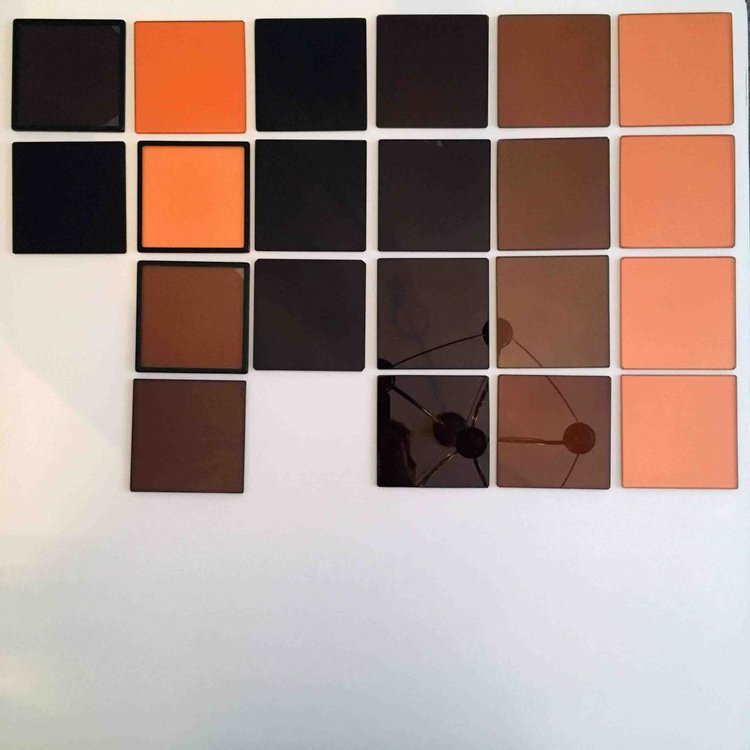
-
 Proceeds from Sales of Sculptures & Assemblages to Benefit City of Hope Writer-director Matt Reeves (War for the Planet of the Apes, Dawn of the Planet of the Apes, Cloverfield), Oscar®-nominated cinematographer Jeff Cronenweth, ASC (The Girl with the Dragon Tattoo, The Social Network), and cinematographer Ernie Holzman, ASC (Without a Trace, Cora Unashamed, Thirtysomething) present “Ernie Holzman: Life ReFocused,” an art show celebrating film cameras and lenses from the 20th century. The event takes place on November 12, from 4 – 7 p.m. at RED Studios Hollywood, where assemblages and sculptures created by Holzman will be for sale, as well as a rare print of the iconic set of Alfred Hitchcock's "Rear Window.” All proceeds benefit cancer research at City of Hope. After being diagnosed with Stage IV non-Hodgkin’s lymphoma in 2011, Holzman underwent surgery and two rounds of chemotherapy. Unable to work, a good friend gifted Holzman with a collection of vintage filmmaking equipment. The cinematographer deconstructed every camera and lens, and was ultimately inspired by the aesthetic beauty and elegance of the equipment, which had been commonplace in his career, to create art. By selling the pieces he has designed, Holzman wants to “pay it forward” and acknowledge the life-saving work of Dr. Barry Rosenbloom at Tower Oncology. Holzman told American Cinematographer magazine, “The opportunity to create art, and ultimately have this showing, has not only been enormously healing for me, but has given my life greater meaning than I have ever known.” City of Hope is a world leader in the research and treatment of cancer, diabetes, and other serious diseases. They deliver scientific miracles that make lives whole again. Founded in 1913, City of Hope is one of only 49 comprehensive cancer centers in the nation, as designated by the National Cancer Institute. The event is open to the public. RED Studios Hollywood is located at 864 N. Cahuenga Blvd, Los Angeles, 90038. No RSVP is necessary to attend.
 -
I haven't lit for a photography shoot before. How would I achieve something close to this lighting? I have three kinos to work with. My original idea is a daylight kino from the left and two tungsten kinos from the right and top Any help would be appreciated! Thanks!

-
Ca ptured my french city, its castle and some parts of london in this compilation. if you can, comment if i made a mistake in color correction https://youtu.be/j-Q9LJXMqpI
-
I made a little compilation of the timelapses I took during a visit in Paris, France. I did not have my video camera in my disposal but I did the best I could. the youtube link is https://youtu.be/Pp8KDQm8yAA
-
I'm into commercial photography (as a hobby), so yesterday I decided to take some random shots of some bottles and cigars found at home. Since I don't have any lighting equipment, I used desk lamps and a construction light. Tried to match them with CTOs though. I didn't fill any glasses because I was not willing to drink or throwing them away, and since they're only tests, it doesn't really matter. Please give me feedback on lighting, setups, and post, as I would really like to get a job as a commercial photographer. Thank you in advance. https://drive.google.com/file/d/0BwHns6JAzPghdnBoMndPSG40SDQ/view?usp=sharing https://drive.google.com/file/d/0BwHns6JAzPghblVjczhvdm1ZcVk/view?usp=sharing https://drive.google.com/file/d/0BwHns6JAzPghM21GNjhHMXVxeVk/view?usp=sharing https://drive.google.com/file/d/0BwHns6JAzPghNTY2alVram1vREE/view?usp=sharing https://drive.google.com/file/d/0BwHns6JAzPghMHRZRzkxeVFQcWs/view?usp=sharing https://drive.google.com/file/d/0BwHns6JAzPghZXpyaE9SWlQtbEU/view?usp=sharing https://drive.google.com/file/d/0BwHns6JAzPghRDZ1Vk1BMnJ0amc/view?usp=sharing https://drive.google.com/file/d/0BwHns6JAzPghSGVXS0UtVFRKcGs/view?usp=sharing
-
I live in Australia where there isn't a lot of film work, so having a film education would make you more employable. I want to be a cinematographer, but there are no cinematography courses so I thought that if I studied a Photography degree, these skills could be transferable? What do you think? (I don't want to study an overall film degree because you must be a writer and I am not)! I've attaches a photo of some of the degree units.
-
I live in Australia where there isn't a lot of film work, so having a film education would make you more employable. I want to be a cinematographer, but there are no cinematography courses so I thought that if I studied a Photography degree, these skills could be transferable? What do you think? (I don't want to study an overall film degree because you must be a writer and I am not)! I've attaches a photo of some of the degree units.